

The Journal
The Makers Series #3 - Craft, Sculpture and Quiet Authority with Cox London
We are joined by Cox London to discuss their collaborative process for crafting timeless sculptural lighting.
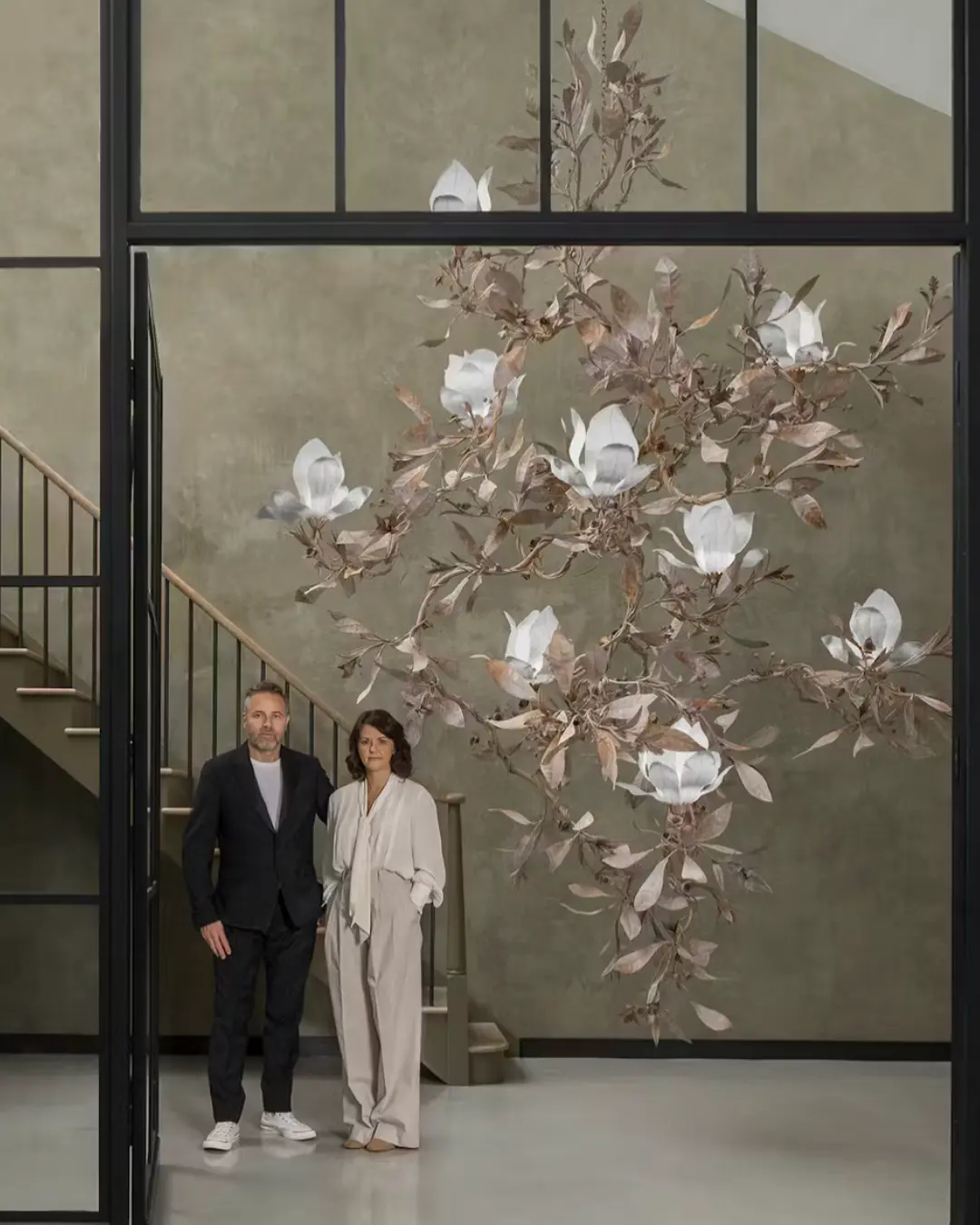
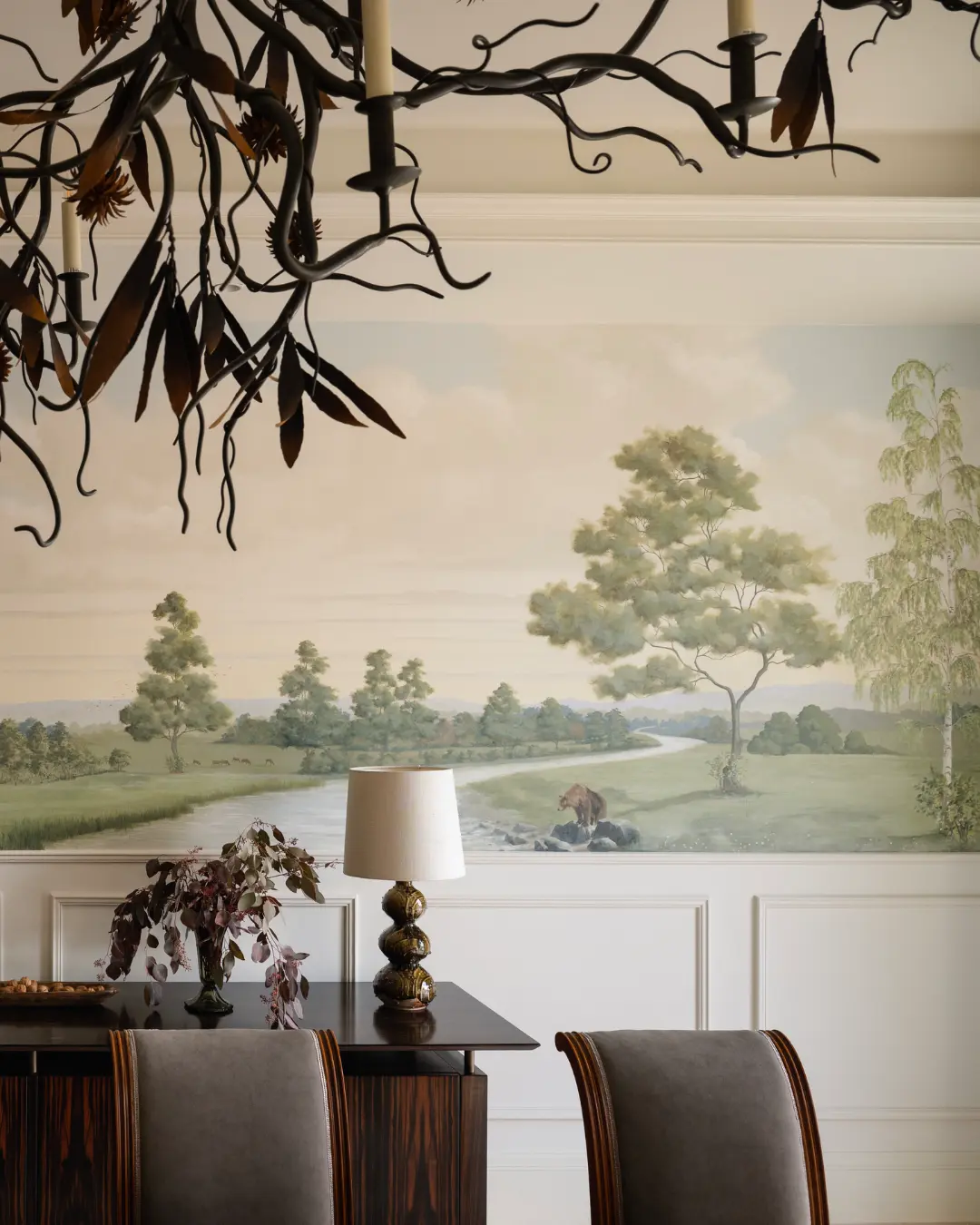
For the third edition of Ward & Co’s Makers Series, we feature Cox London, the husband-and-wife studio founded by Christopher and Nicola Cox, renowned for sculptural lighting and handcrafted pieces shaped by nature, artistry and traditional craft.
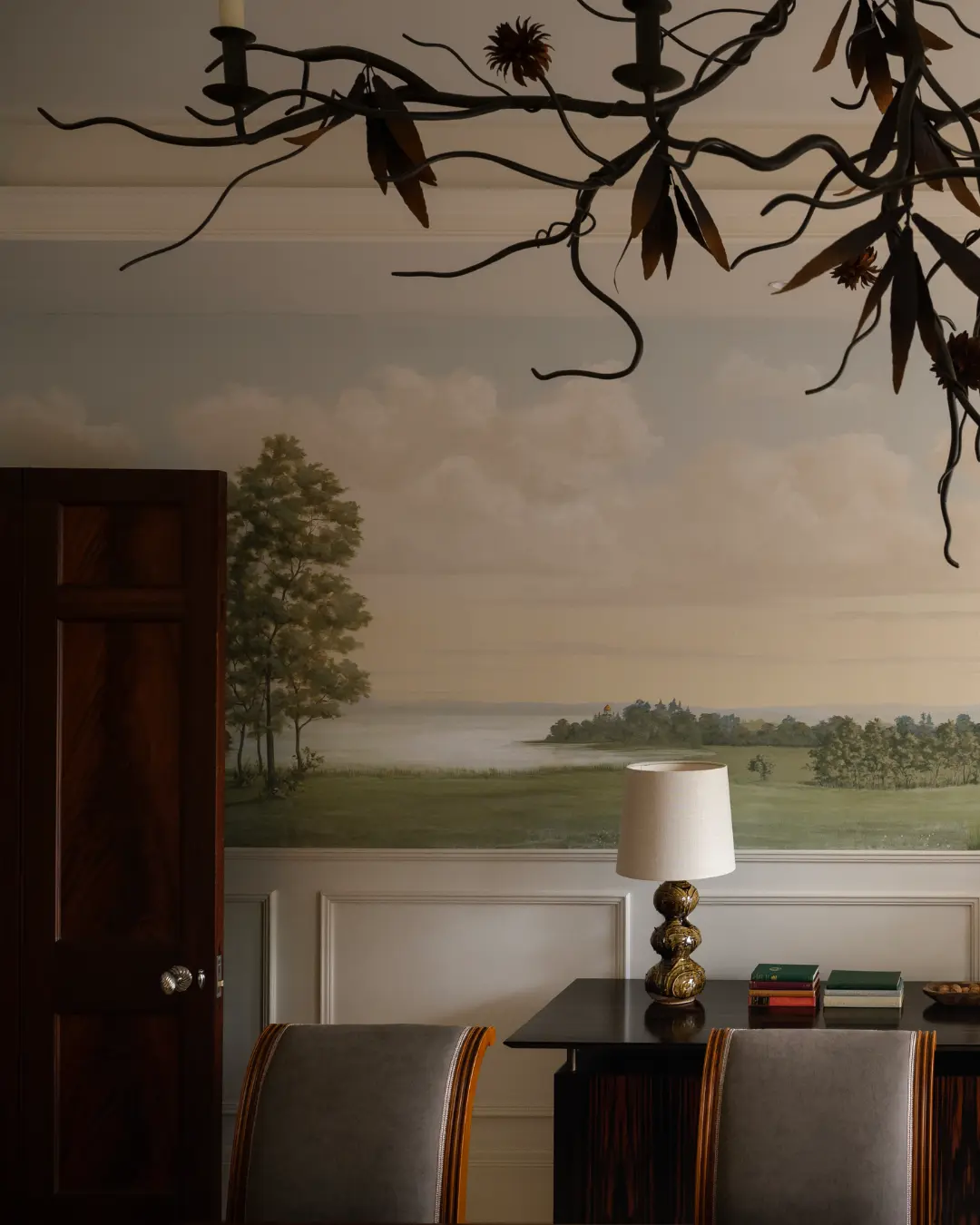
For project Catharine, the collaboration between Ward & Co and Cox London culminated in a bespoke Queen of the Night chandelier, bringing quiet drama and craftsmanship to the interior. The following Q&A sees Christopher reflect on the creative process and the piece.
1- Your pieces feel sculptural rather than purely functional. At what point in the design process does a piece become something closer to an artwork?
We were trained as sculptors, so we approach design with an artist’s mindset. We prioritise form, material, surface and colour, rather than starting with function. After art school, we both took roles that supported our fine-art practice while teaching us essential craft skills, Nicola through seven years in bronze and glass casting workshops, and myself through antique metalwork restoration. That training gave us a practical, hands-on approach and a deep understanding of historical design, which continues to shape how we make our work today.
2- When you begin designing a new work, what usually comes first: the material, the form, or the space it will live in etc?
Subject, form and scale usually come first. Although it’s useful to imagine where a piece might be placed we never let it dictate the design because majority of pieces commissioned are tailored to our client's brief.
3- Nature clearly plays a vital role in your designs. When you look to the natural world for inspiration, what are you observing?
Yes, Nicola and I both have a strong connection to the wilderness, animal, plant and mineral, but we never aim to reproduce nature literally. Coming from three generations of antique dealers and collectors, I’m more interested in the artist’s interpretation: how nature is filtered through personal selection, abstraction or an unusual observation. That shift away from the obvious is where it becomes most compelling for me.
4- What is the most technically challenging aspect of creating a chandelier like the one you made for our country project?
Once we fully understand the client brief and the space, we develop the design through clear two-dimensional drawings, which, once approved, approved and scaled up to guide the making process. The real technical challenge lies in translating those flat drawings into a resolved three-dimensional form. This is where sound artistic judgement and highly skilled craftsmanship meet.
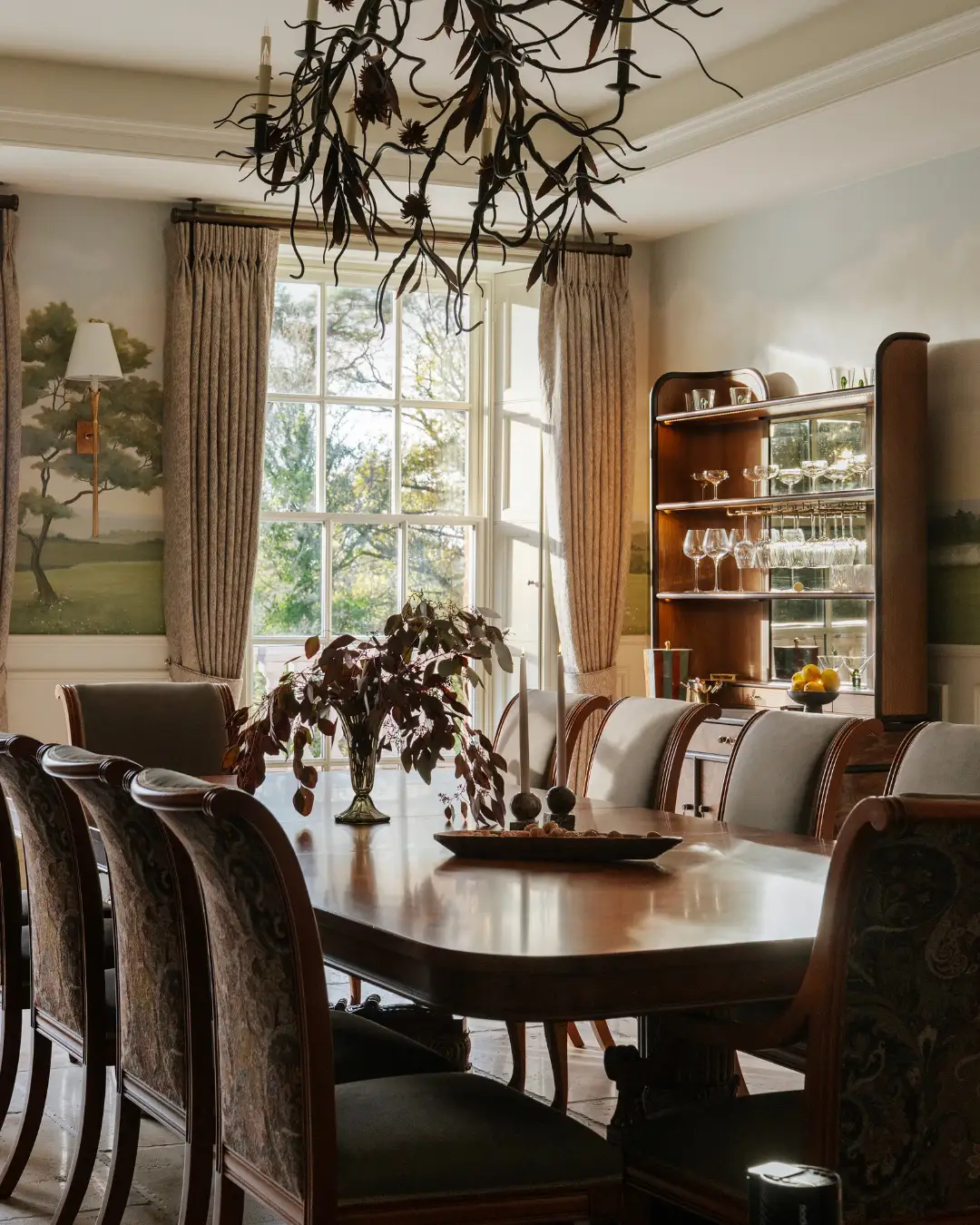
The Queen of the Night we created for Ward and Co, had to feel generous in scale without overpowering the space, sitting comfortably above a 14-seater table, working within tight ceiling and access constraints, Ward & Co balance spaces with with great sensitivity so the resulting room scape was pitch perfect.
5 - Your pieces are crafted using traditional techniques and processes. How important it is to you to continue and pass on those craft skills and how are you doing this? (please tell us about the training, artisans, apprenticeship scheme etc)
Yes, Nicky and I trained as sculptors for 4 years at Art school. Following that I learnt the traditional metalworking skills we still use today through a six-year apprenticeship in East London, restoring antique metalwork. Nicola mastered mould making and casting working across two bronze foundries and a glass-casting studio over the same period.
These highly specialised skills sit at the heart of everything we make, and sustaining them is fundamental to the long-term strength of our business. Over the past 25 years, we have carefully built an in-house team of makers, now around 65 highly skilled artisans, supported by a further 40 specialist roles, and the careful transfer of knowledge has been central to our growth.
Much of this learning historically took place on the workshop floor, but structuring the way we taught led to a Princess Royal Training Award in 2023, encouraging us to formalise our approach. In 2025, we launched the Cox London apprenticeship: a three-year programme that introduces apprentices to every department in year one, followed by focused specialisation in years two and three.
Nicola’s appointment as a Fellow of City & Guilds in 2024 recognises her commitment to sustaining and promoting craft skills. Looking ahead to 2026–27, we are working toward establishing the Cox London School of Applied Arts to support both existing and future makers.
6- When working with interior designers such as Ward & Co, how collaborative is the process?
Clients invest in a Cox piece, but the designer’s brief is central to shaping it for a specific project. Adjustments can be subtle or significant but we consider every decision important.
Without Sarah and Rosie’s deep design knowledge and their ability to understand and interpret all their client's desires, our process could never be the successful collaboration it is.
7- Looking at your chandelier within the Ward & Co project, what stands out to you most about how the piece sits within the space?
As always, Ward & Co have struck a confident balance between contemporary and traditional themes and the appointment of a Cox piece has been handled with clarity and restraint.
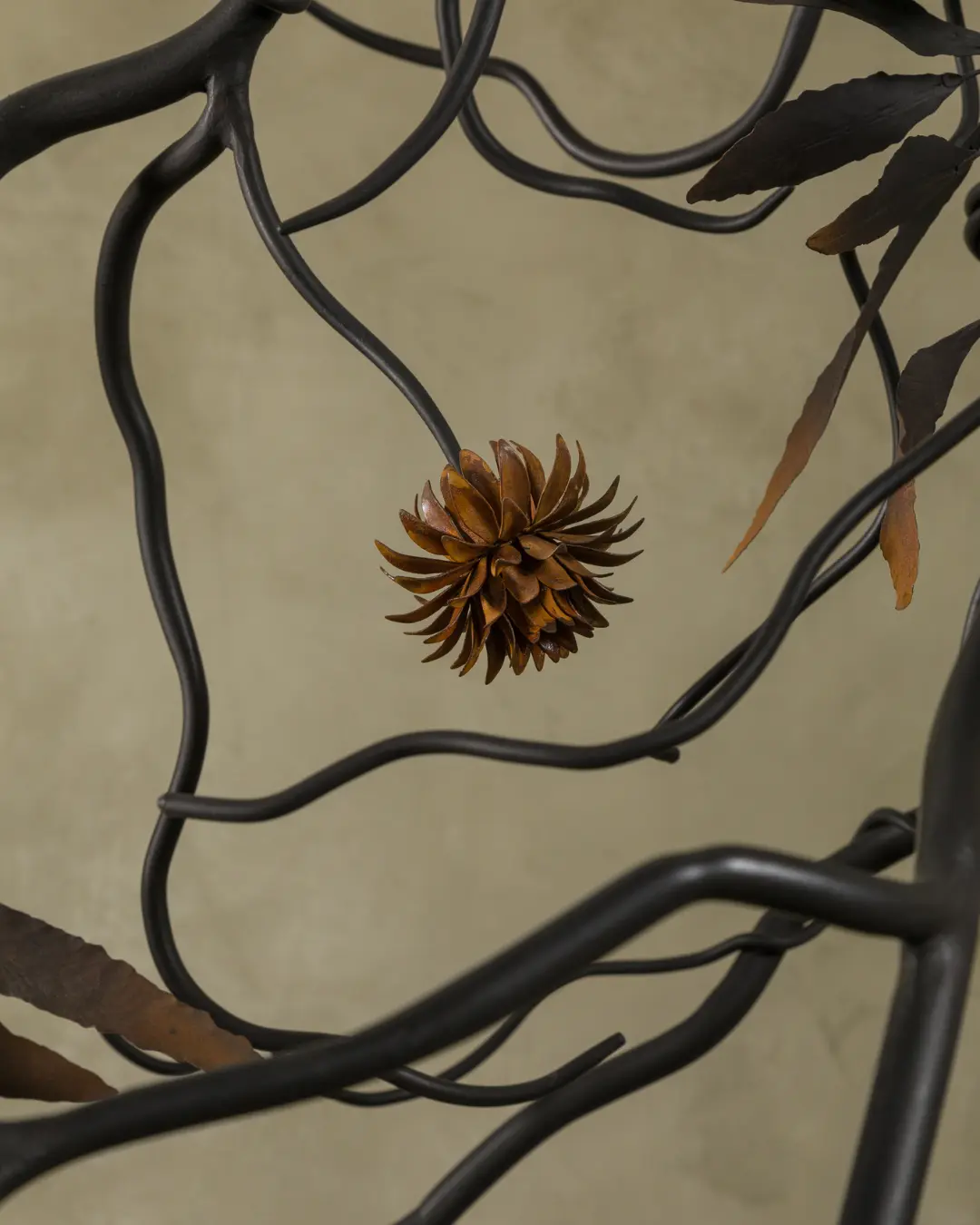
The Ward and Co team guided the scale and position of this bespoke Queen of the Night Chandelier to sit at the optimum height, to be appreciated without intruding on the extraordinary parkland views. The rich bronze and amber foliage, speak to the warmth of the antique furniture while the form speaks beautifully to the surrounding landscape without being too literal.
Delighted to see one our pieces in such a well considered room-scape.
8- And if you had to describe it in three words, what would they be?
Measured with quiet authority
At the centre of every successful collaboration is a shared respect for craftsmanship, proportion and atmosphere. The partnership between Ward & Co and Cox London reflects exactly that, creating pieces that feel timeless, considered and entirely at ease within their surroundings.
.svg)
ward & co. Interiors
2nd Floor, 8 Queen Anne Street, London, W1G 9LD

The Journal
The Makers Series #3 - Craft, Sculpture and Quiet Authority with Cox London
June 19, 2026
We are joined by Cox London to discuss their collaborative process for crafting timeless sculptural lighting.
For the third edition of Ward & Co’s Makers Series, we feature Cox London, the husband-and-wife studio founded by Christopher and Nicola Cox, renowned for sculptural lighting and handcrafted pieces shaped by nature, artistry and traditional craft.
For project Catharine, the collaboration between Ward & Co and Cox London culminated in a bespoke Queen of the Night chandelier, bringing quiet drama and craftsmanship to the interior. The following Q&A sees Christopher reflect on the creative process and the piece.
1- Your pieces feel sculptural rather than purely functional. At what point in the design process does a piece become something closer to an artwork?
We were trained as sculptors, so we approach design with an artist’s mindset. We prioritise form, material, surface and colour, rather than starting with function. After art school, we both took roles that supported our fine-art practice while teaching us essential craft skills, Nicola through seven years in bronze and glass casting workshops, and myself through antique metalwork restoration. That training gave us a practical, hands-on approach and a deep understanding of historical design, which continues to shape how we make our work today.
2- When you begin designing a new work, what usually comes first: the material, the form, or the space it will live in etc?
Subject, form and scale usually come first. Although it’s useful to imagine where a piece might be placed we never let it dictate the design because majority of pieces commissioned are tailored to our client's brief.
3- Nature clearly plays a vital role in your designs. When you look to the natural world for inspiration, what are you observing?
Yes, Nicola and I both have a strong connection to the wilderness, animal, plant and mineral, but we never aim to reproduce nature literally. Coming from three generations of antique dealers and collectors, I’m more interested in the artist’s interpretation: how nature is filtered through personal selection, abstraction or an unusual observation. That shift away from the obvious is where it becomes most compelling for me.
4- What is the most technically challenging aspect of creating a chandelier like the one you made for our country project?
Once we fully understand the client brief and the space, we develop the design through clear two-dimensional drawings, which, once approved, approved and scaled up to guide the making process. The real technical challenge lies in translating those flat drawings into a resolved three-dimensional form. This is where sound artistic judgement and highly skilled craftsmanship meet.
The Queen of the Night we created for Ward and Co, had to feel generous in scale without overpowering the space, sitting comfortably above a 14-seater table, working within tight ceiling and access constraints, Ward & Co balance spaces with with great sensitivity so the resulting room scape was pitch perfect.
5 - Your pieces are crafted using traditional techniques and processes. How important it is to you to continue and pass on those craft skills and how are you doing this? (please tell us about the training, artisans, apprenticeship scheme etc)
Yes, Nicky and I trained as sculptors for 4 years at Art school. Following that I learnt the traditional metalworking skills we still use today through a six-year apprenticeship in East London, restoring antique metalwork. Nicola mastered mould making and casting working across two bronze foundries and a glass-casting studio over the same period.
These highly specialised skills sit at the heart of everything we make, and sustaining them is fundamental to the long-term strength of our business. Over the past 25 years, we have carefully built an in-house team of makers, now around 65 highly skilled artisans, supported by a further 40 specialist roles, and the careful transfer of knowledge has been central to our growth.
Much of this learning historically took place on the workshop floor, but structuring the way we taught led to a Princess Royal Training Award in 2023, encouraging us to formalise our approach. In 2025, we launched the Cox London apprenticeship: a three-year programme that introduces apprentices to every department in year one, followed by focused specialisation in years two and three.
Nicola’s appointment as a Fellow of City & Guilds in 2024 recognises her commitment to sustaining and promoting craft skills. Looking ahead to 2026–27, we are working toward establishing the Cox London School of Applied Arts to support both existing and future makers.
6- When working with interior designers such as Ward & Co, how collaborative is the process?
Clients invest in a Cox piece, but the designer’s brief is central to shaping it for a specific project. Adjustments can be subtle or significant but we consider every decision important.
Without Sarah and Rosie’s deep design knowledge and their ability to understand and interpret all their client's desires, our process could never be the successful collaboration it is.
7- Looking at your chandelier within the Ward & Co project, what stands out to you most about how the piece sits within the space?
As always, Ward & Co have struck a confident balance between contemporary and traditional themes and the appointment of a Cox piece has been handled with clarity and restraint.
The Ward and Co team guided the scale and position of this bespoke Queen of the Night Chandelier to sit at the optimum height, to be appreciated without intruding on the extraordinary parkland views. The rich bronze and amber foliage, speak to the warmth of the antique furniture while the form speaks beautifully to the surrounding landscape without being too literal.
Delighted to see one our pieces in such a well considered room-scape.
8- And if you had to describe it in three words, what would they be?
Measured with quiet authority
At the centre of every successful collaboration is a shared respect for craftsmanship, proportion and atmosphere. The partnership between Ward & Co and Cox London reflects exactly that, creating pieces that feel timeless, considered and entirely at ease within their surroundings.