

The Journal
A Civilised Interlude at Four: Champagne, Contacts and the Business of Design
At four o’clock, just as the working day begins to loosen its tie, Ward & Co opened the doors of their new offices on Oxford Street.
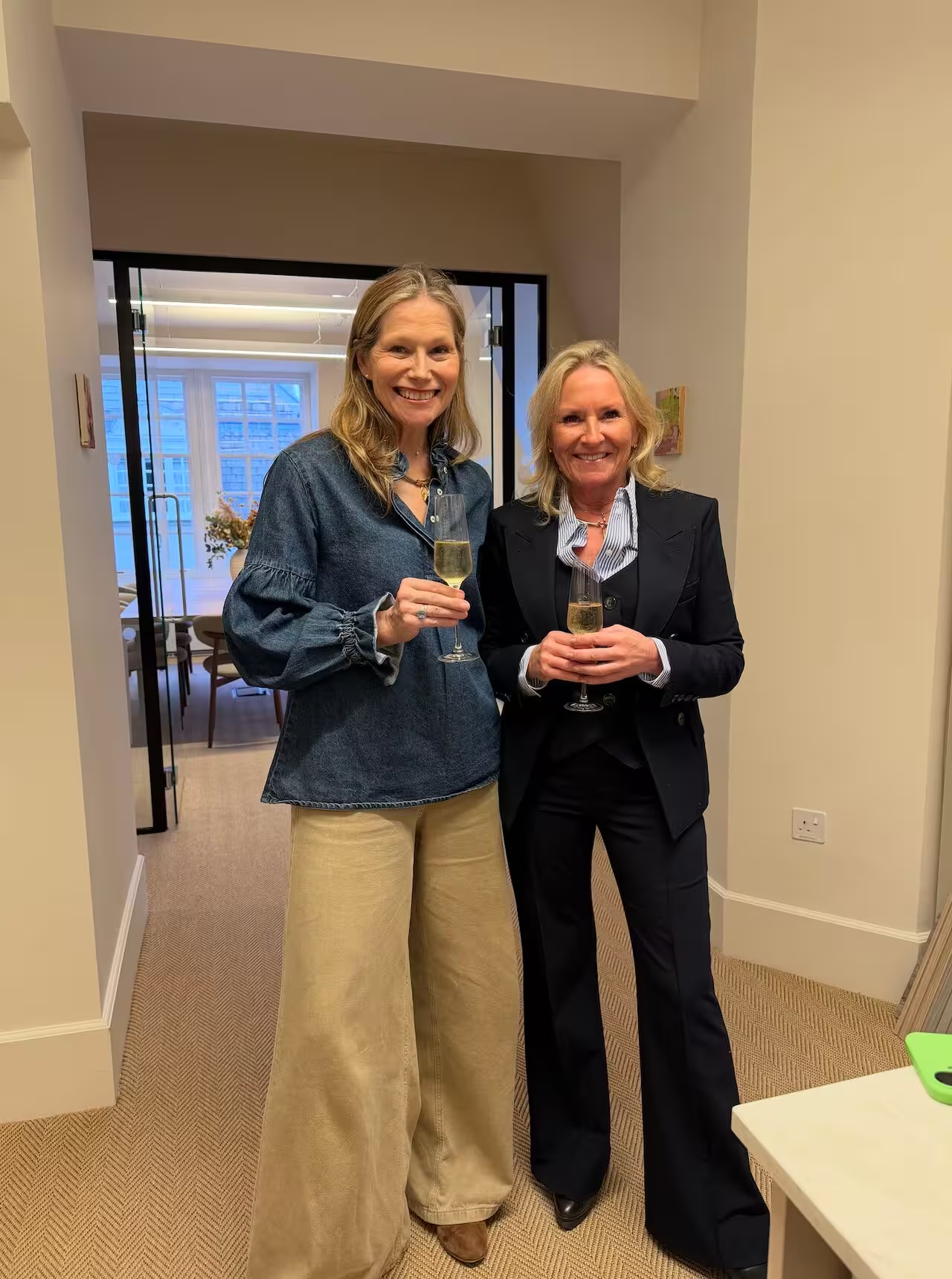
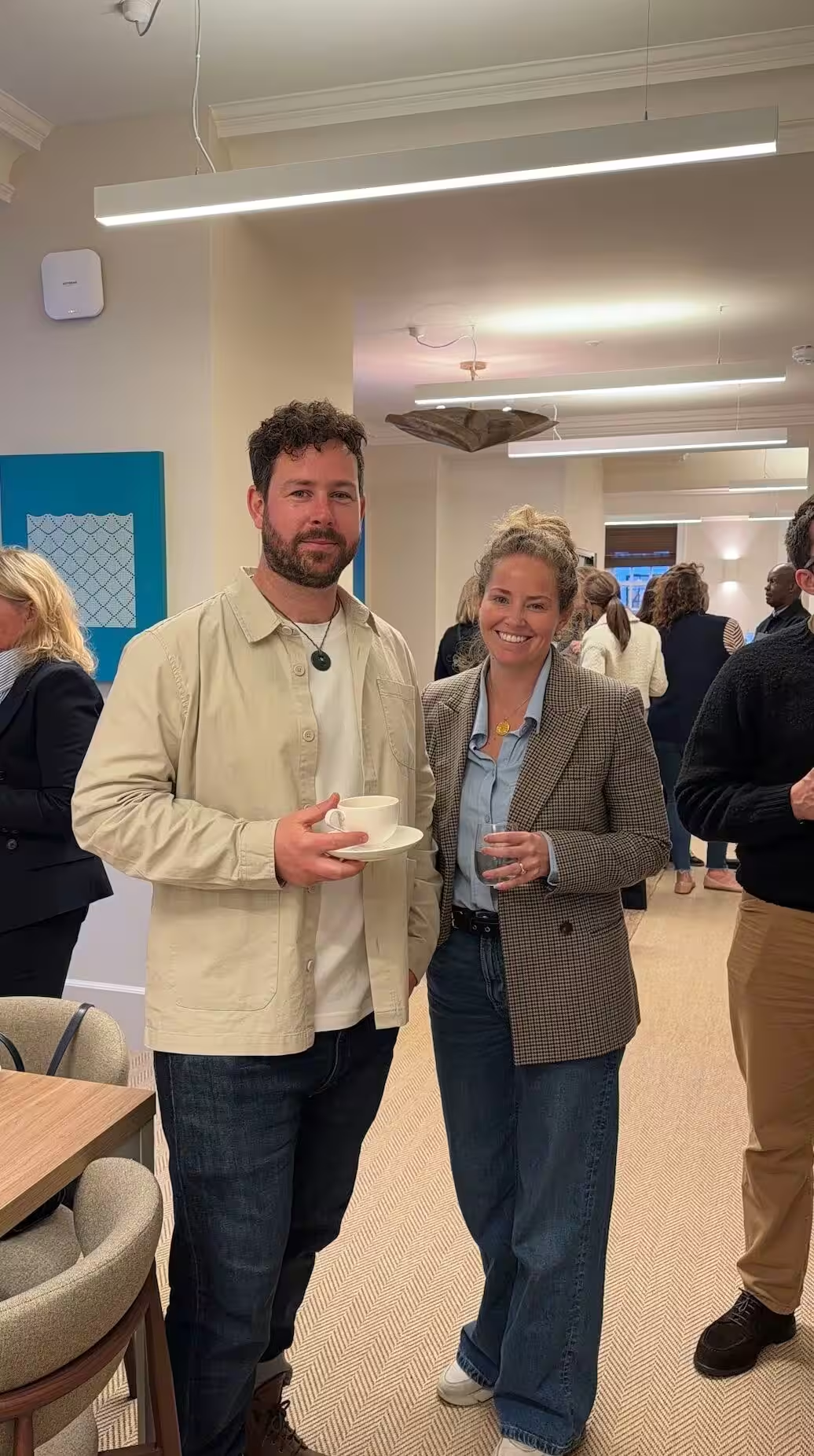
There are few more reliable indicators of civilised society than the quiet clink of champagne at an hour that refuses to commit to either lunch or dinner. At four o’clock, just as the working day begins to loosen its tie, Ward & Co opened the doors of their new offices on Oxford Street and, with it, something closer to a well-mannered salon than a straightforward networking event.
The setting did a fair amount of the talking. Second floor, just off the gravitational pull of the fashionable Langham Hotel, the studio felt less like an office and more like a considered argument in favour of proportion, light and restraint. White walls, naturally. Though not a simple white. One suspected a quiet spectrum at play, perhaps the early sketch of another project where forty variations of the same shade become a philosophy rather than a paint choice.
Guests arrived in that polite London stagger, half-punctual, half apologetic. Mungo Adam Smith drifted into conversation with Chloe Leefe, while Fiona Vogel and Arabella Younes compared notes from an industry currently navigating choppy waters with admirable composure. Bernie deLe Cuona, whose fabrics have dressed more interiors than most people have had hot dinners, lent the room an additional layer of quiet authority.
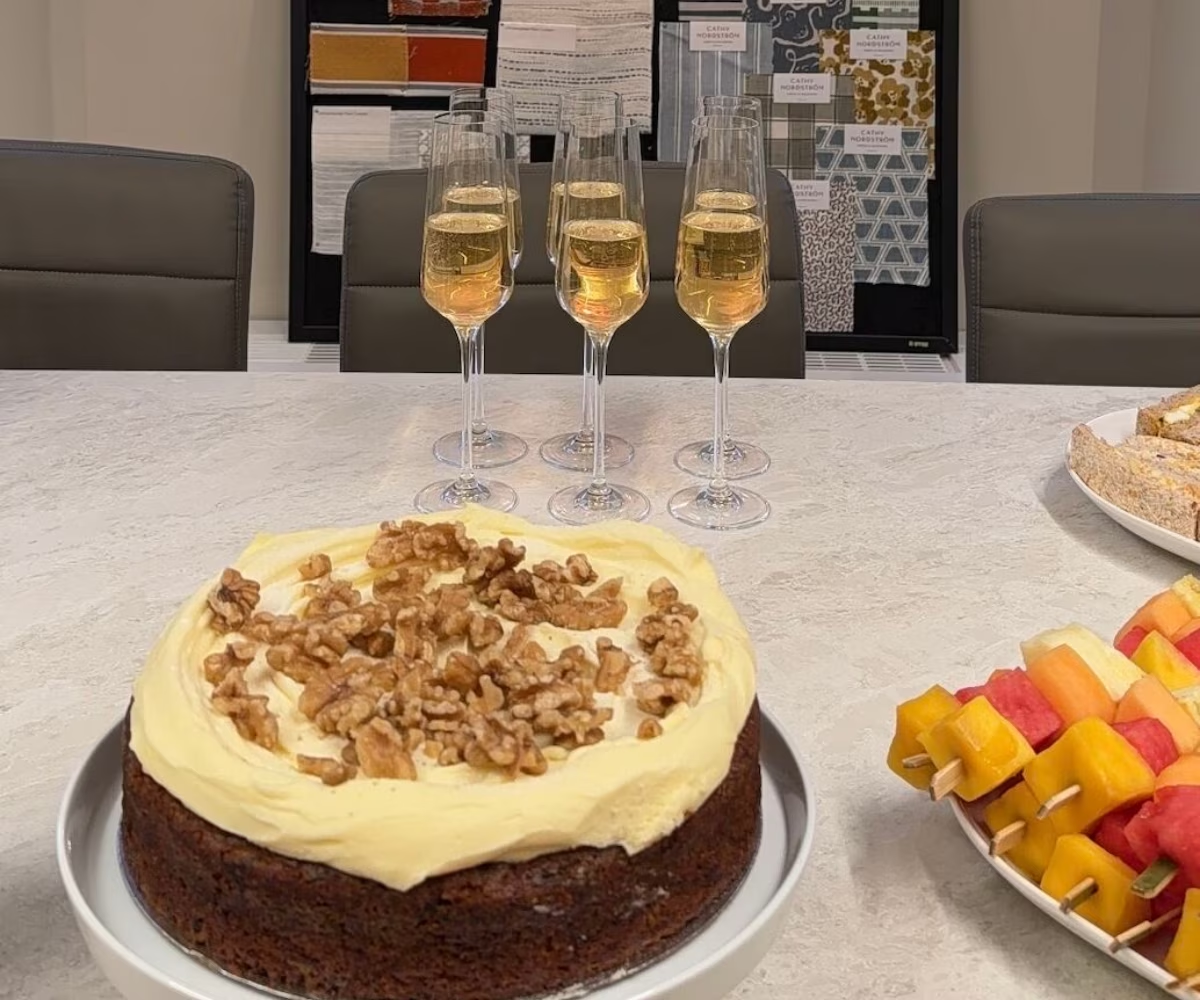
The food, as it should be at such an hour, was both decorative and decisive. Coronation chicken, smoked salmon, prawns. Fruit skewers attempting virtue. Cakes from Ottolenghi that made restraint a theoretical concept. Champagne circulated with just enough generosity to take the edge off a day spent negotiating budgets, clients and the occasional existential crisis of the built environment.
What followed was less “networking” and more a gentle choreography of connection. Business cards exchanged with the discretion of diplomats. Conversations that began with market conditions in London, currently described in tones usually reserved for British weather, and ended in stories that bordered on the absurd. One journalist spoke of writing about colour therapy and the politics of white. Another suggested certain clients made the Financial Times seem positively easygoing. There was, inevitably, a tale involving a gift and a Rolex, which hovered somewhere between aspiration and anthropology.
If Rosie Ward gave the occasion its clarity of purpose, Sarah Ward supplied its philosophy, expressed not as strategy but instinct. It is, as she put it, “important to nurture like-minded people within our industry and make them feel valued. It’s not just about who will get us which project, but a camaraderie, a comfort in working with people who understand our ethos.” And beneath the ease of the afternoon sat something more deliberate. Names quietly noted, introductions made with intent. “From one gathering,” she observed, “you find fifteen people you should meet, and suddenly eight new conversations begin. That’s how it happens.”
Through it all, the purpose held steady. Ward & Co were not merely hosting. They were convening. Architects, financiers, editors, designers. Different disciplines, same ecosystem. A reminder that good interiors do not happen in isolation. They are negotiated, assembled, argued over, refined. Much like the conversations unfolding in the room.
Notably, beyond the hum of polite society, work continued. In the adjacent space, designers remained at their desks, quietly shaping projects that would, in time, host gatherings just like this one. It lent the occasion a certain credibility. This was not a performance. It was practice.
Rosie Ward, surveying the room with the calm of someone who understands both the creative and commercial necessity of such moments, put it plainly. “The aim was to bring different people in the industry together. Different disciplines, networking, and to show our new office. It worked. People met those they hadn’t before.”
By half past six, the room began its gradual dispersal. Some to dinners. Some to trains. Some, with admirable honesty, to toddlers. The glasses emptied, the conversations lingered, and the cards found their way into pockets with quiet intent.
It is tempting to describe the afternoon as a success because it was enjoyable. That would be missing the point. It was successful because it did what Ward & Co do best. It created a setting where people, ideas and possibilities could sit comfortably together, long enough for something useful to happen.
And in between the last sip of champagne and the first follow-up email, that is where business, like good design, really begins.
.svg)
ward & co. Interiors
2nd Floor, 8 Queen Anne Street, London, W1G 9LD

The Journal
A Civilised Interlude at Four: Champagne, Contacts and the Business of Design
April 2, 2026
At four o’clock, just as the working day begins to loosen its tie, Ward & Co opened the doors of their new offices on Oxford Street.
There are few more reliable indicators of civilised society than the quiet clink of champagne at an hour that refuses to commit to either lunch or dinner. At four o’clock, just as the working day begins to loosen its tie, Ward & Co opened the doors of their new offices on Oxford Street and, with it, something closer to a well-mannered salon than a straightforward networking event.
The setting did a fair amount of the talking. Second floor, just off the gravitational pull of the fashionable Langham Hotel, the studio felt less like an office and more like a considered argument in favour of proportion, light and restraint. White walls, naturally. Though not a simple white. One suspected a quiet spectrum at play, perhaps the early sketch of another project where forty variations of the same shade become a philosophy rather than a paint choice.
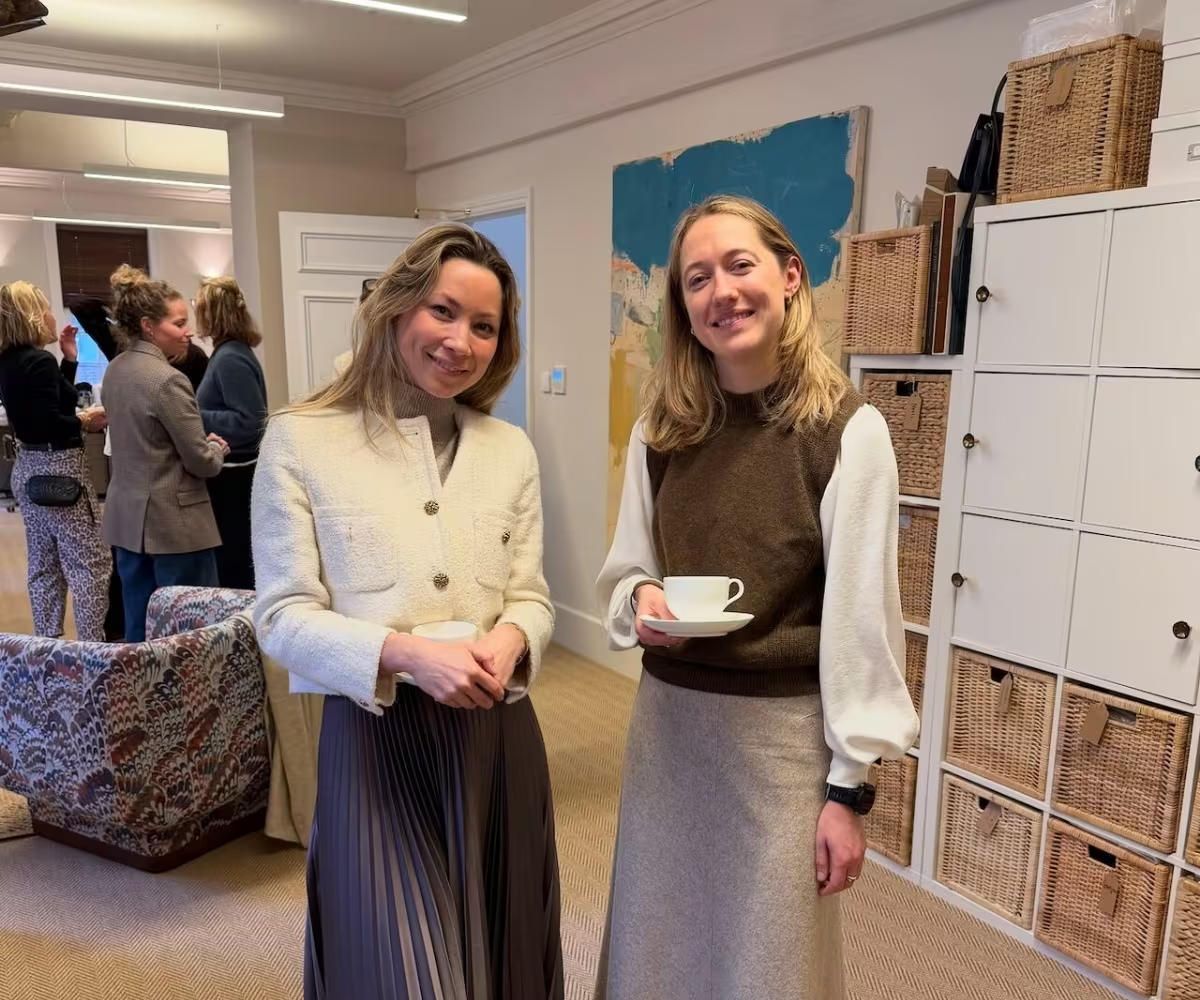
Guests arrived in that polite London stagger, half-punctual, half apologetic. Mungo Adam Smith drifted into conversation with Chloe Leefe, while Fiona Vogel and Arabella Younes compared notes from an industry currently navigating choppy waters with admirable composure. Bernie deLe Cuona, whose fabrics have dressed more interiors than most people have had hot dinners, lent the room an additional layer of quiet authority.
The food, as it should be at such an hour, was both decorative and decisive. Coronation chicken, smoked salmon, prawns. Fruit skewers attempting virtue. Cakes from Ottolenghi that made restraint a theoretical concept. Champagne circulated with just enough generosity to take the edge off a day spent negotiating budgets, clients and the occasional existential crisis of the built environment.
What followed was less “networking” and more a gentle choreography of connection. Business cards exchanged with the discretion of diplomats. Conversations that began with market conditions in London, currently described in tones usually reserved for British weather, and ended in stories that bordered on the absurd. One journalist spoke of writing about colour therapy and the politics of white. Another suggested certain clients made the Financial Times seem positively easygoing. There was, inevitably, a tale involving a gift and a Rolex, which hovered somewhere between aspiration and anthropology.
If Rosie Ward gave the occasion its clarity of purpose, Sarah Ward supplied its philosophy, expressed not as strategy but instinct. It is, as she put it, “important to nurture like-minded people within our industry and make them feel valued. It’s not just about who will get us which project, but a camaraderie, a comfort in working with people who understand our ethos.” And beneath the ease of the afternoon sat something more deliberate. Names quietly noted, introductions made with intent. “From one gathering,” she observed, “you find fifteen people you should meet, and suddenly eight new conversations begin. That’s how it happens.”
Through it all, the purpose held steady. Ward & Co were not merely hosting. They were convening. Architects, financiers, editors, designers. Different disciplines, same ecosystem. A reminder that good interiors do not happen in isolation. They are negotiated, assembled, argued over, refined. Much like the conversations unfolding in the room.
Notably, beyond the hum of polite society, work continued. In the adjacent space, designers remained at their desks, quietly shaping projects that would, in time, host gatherings just like this one. It lent the occasion a certain credibility. This was not a performance. It was practice.
Rosie Ward, surveying the room with the calm of someone who understands both the creative and commercial necessity of such moments, put it plainly. “The aim was to bring different people in the industry together. Different disciplines, networking, and to show our new office. It worked. People met those they hadn’t before.”
By half past six, the room began its gradual dispersal. Some to dinners. Some to trains. Some, with admirable honesty, to toddlers. The glasses emptied, the conversations lingered, and the cards found their way into pockets with quiet intent.
It is tempting to describe the afternoon as a success because it was enjoyable. That would be missing the point. It was successful because it did what Ward & Co do best. It created a setting where people, ideas and possibilities could sit comfortably together, long enough for something useful to happen.
And in between the last sip of champagne and the first follow-up email, that is where business, like good design, really begins.